
What’s the Real Difference?
Jewelry can look beautiful at first glance — whether it is handmade or mass-produced. But beneath the surface, there are important differences in craftsmanship, materials, durability, and long-term value.
Understanding these differences helps you make informed decisions and choose pieces that align with your expectations for quality and longevity.
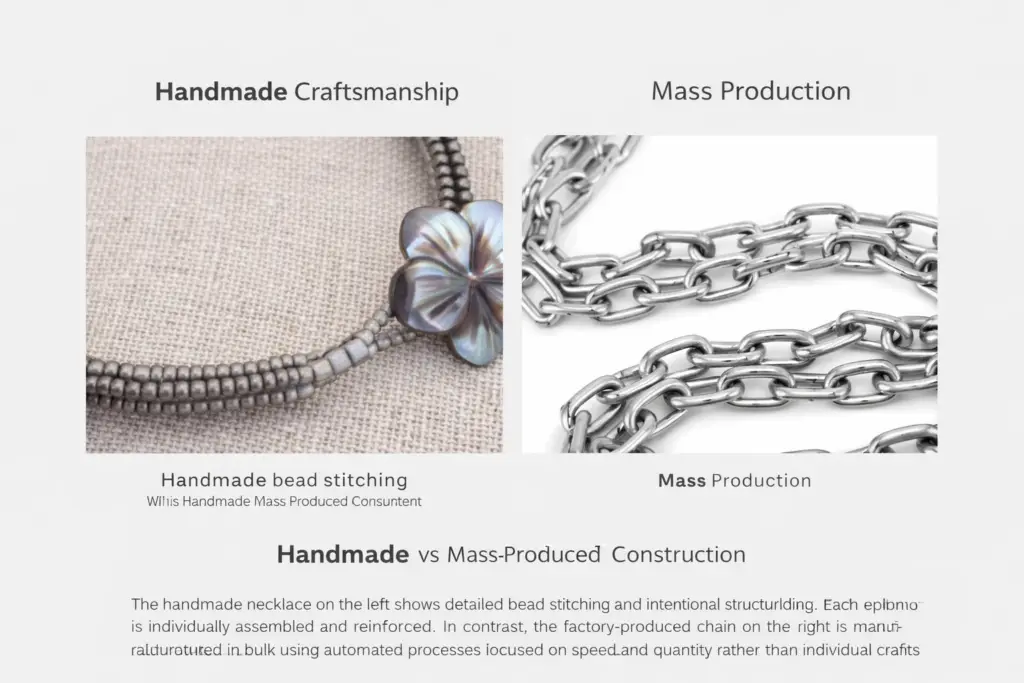
The Production Process
Handmade Jewelry
Handmade jewelry is created individually by an artisan. Each piece requires:
- Material selection
- Structural planning
- Careful stitching or assembly
- Precision finishing
Time invested can range from several hours to multiple days depending on complexity.
Small imperfections may exist — but these are signs of human craftsmanship, not defects.
Mass-Produced Jewelry
Mass-produced jewelry is manufactured in bulk, often in factories where speed and quantity are prioritized.
Production typically involves:
- Pre-made molds
- Machine stamping
- Automated assembly
- Minimal quality inspection
The focus is efficiency and cost reduction.
Material Quality
Handmade
Artisans often choose:
- High-quality glass beads
- Natural stones
- Durable threads
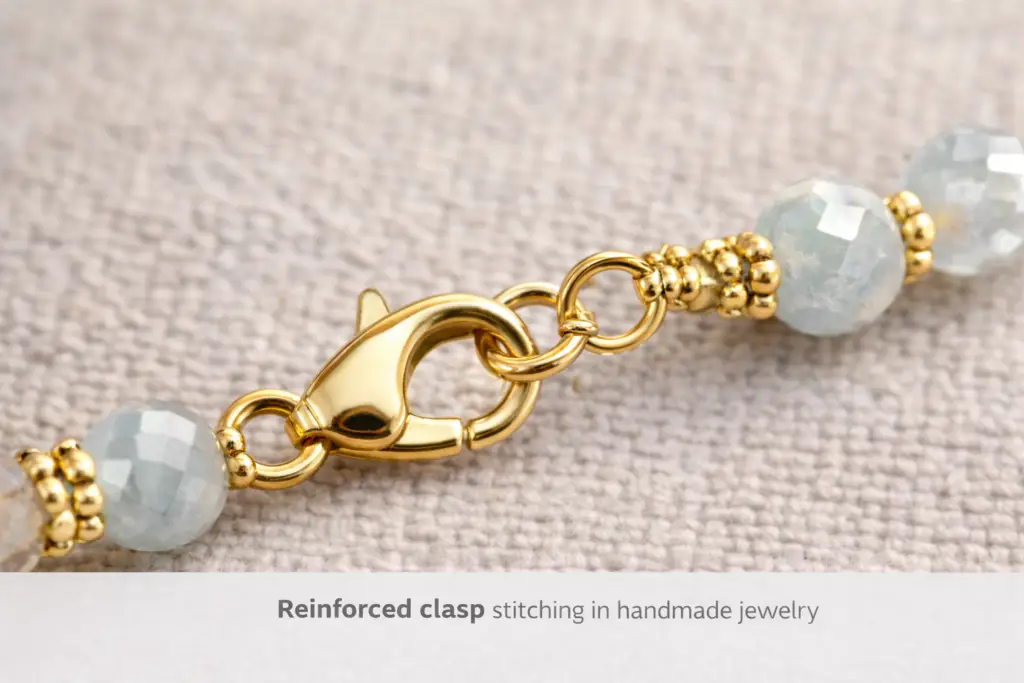
- Reinforced clasps
Materials are selected intentionally to support design and longevity.
Mass-Produced
Factory jewelry frequently uses:
- Plated base metals
- Resin or acrylic beads
- Glue instead of stitching
- Thin chains
Lower-cost materials help reduce production expense.
Durability & Construction
Handmade jewelry is often constructed with:
✔ Reinforced thread paths
✔ Even tension stitching
✔ Balanced weight distribution
✔ Secure closures
Mass-produced jewelry may rely heavily on:
✖ Glue bonding
✖ Thin wire loops
✖ Surface plating
Over time, glued components loosen and plating may fade.
Uniqueness & Design
Handmade jewelry offers:
- Limited quantity or one-of-a-kind pieces
- Custom color combinations
- Personalized sizing
- Creative expression
Mass-produced jewelry offers:
- Trend-based designs
- Large quantities
- Identical copies
- Standard sizing
If individuality matters to you, handmade pieces stand apart.
Price vs Value
Mass-produced jewelry is usually cheaper upfront.
Handmade jewelry may cost more because:
- Time is invested
- Materials are higher quality
- Craftsmanship is detailed
- Production is limited
However, longevity often makes handmade pieces a better long-term investment.
Environmental & Ethical Considerations
Handmade jewelry typically:
- Is produced in small batches
- Has lower industrial impact
- Supports independent artists
Mass production often involves:
- Large-scale manufacturing
- Industrial waste
- Fast fashion cycles
Choosing handmade supports sustainable creative practices.
When Mass-Produced Jewelry Makes Sense
There is a place for mass-produced pieces:
- Trend experiments
- Occasional wear
- Budget accessories
But for meaningful, long-lasting pieces — craftsmanship matters.
QUICK COMPARISON TABLE
| Feature | Handmade Jewelry | Mass-Produced Jewelry |
|---|---|---|
| Production | Individually crafted | Factory manufactured |
| Materials | Often higher quality | Often cost-driven |
| Durability | Reinforced stitching | Glue-based assembly |
| Uniqueness | Limited or custom | Identical copies |
| Price | Higher upfront | Lower upfront |
| Longevity | Long-term wear | Short-term wear |
Looking for Handmade Craftsmanship?
If you value detail, durability, and unique design, explore custom jewelry crafted with precision and care.
Leave a Reply