
Understanding Quality, Types & Construction in Jewelry
Glass beads have been used in jewelry for centuries. From intricate embroidery to structured necklaces, they offer versatility, color depth, and artistic freedom.
However, not all glass beads are created equal. Differences in manufacturing, coating, shape precision, and construction techniques directly affect durability and long-term wear.
This guide explains the main types of glass beads, how finishes work, and what determines quality in handcrafted jewelry.
Types of Glass Beads
Glass beads vary in shape, finish, and production origin.
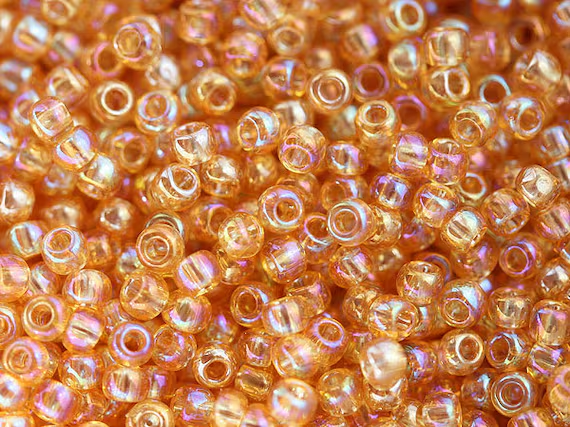
Seed Beads
Small, cylindrical or rounded beads used in embroidery and weaving.
Used for:
- Bead embroidery
- Peyote stitch
- Loom work
- Structural bead stitching
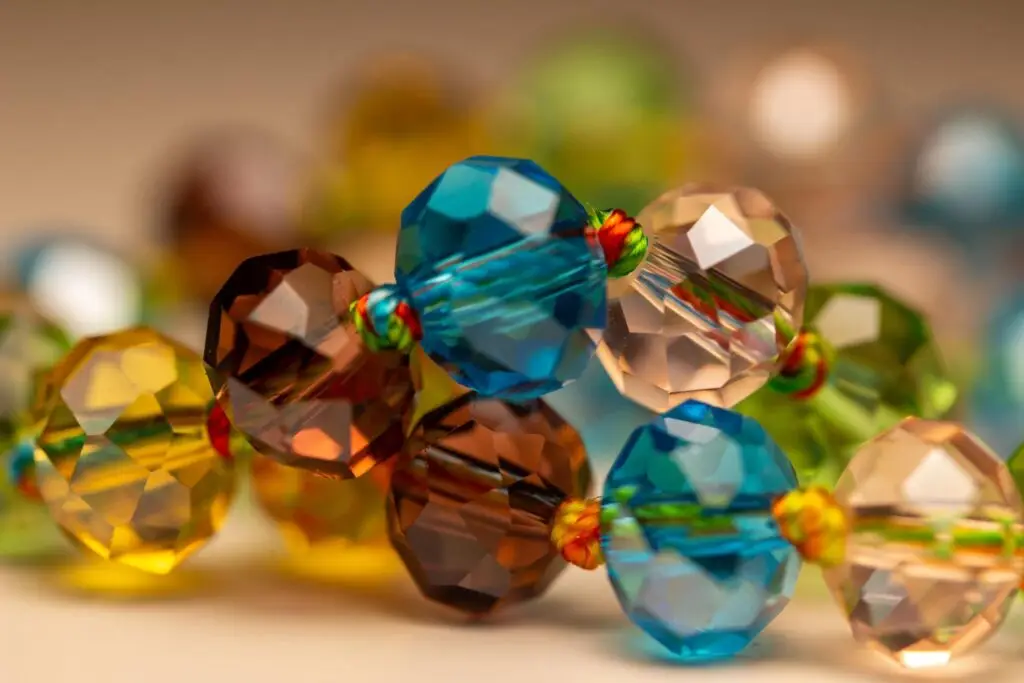
Faceted Glass Beads
Machine-cut beads with reflective surfaces that add sparkle.
Common in:
- Bracelets
- Earrings
- Accent elements in embroidery
Pressed & Molded Glass Beads
Created using molds. Often decorative and textured.
They can imitate:
- Gemstones
- Flowers
- Vintage designs
Quality varies depending on manufacturer.
Bead Origin & Manufacturing Precision
Japanese Seed Beads (Miyuki, Toho)
- Extremely uniform
- Sharp drilling precision
- Ideal for structured stitching
- Excellent durability
Czech Glass Beads
- Traditional craftsmanship
- Slight size variation
- Rich color options
- Strong, durable glass
Low-Cost Mass Production
- Inconsistent size
- Uneven holes
- Fragile coatings
- Lower durability
Uniformity affects:
- Stitch tension
- Structural strength
- Design precision
Understanding Bead Finishes
Glass beads can have different surface treatments.
🔹 Transparent
Clear or lightly tinted glass.
Durability:
High.
🔹 Matte / Frosted
Surface is treated to reduce shine.
Durability:
Usually stable.
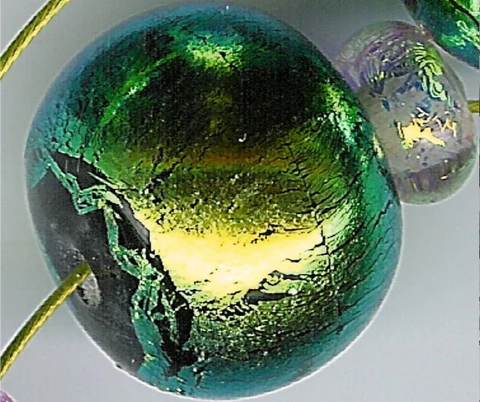
🔹 Metallic Coated
Shiny gold, silver, or iridescent finishes applied as surface coating.
Durability:
Depends on coating quality. May fade with friction.
🔹 Dyed or Painted
Color applied externally.
Risk:
Possible fading, especially in bracelets exposed to constant contact.
Construction Matters More Than the Bead
High-quality beadwork includes:
✔ Reinforced thread paths
✔ Even tension stitching
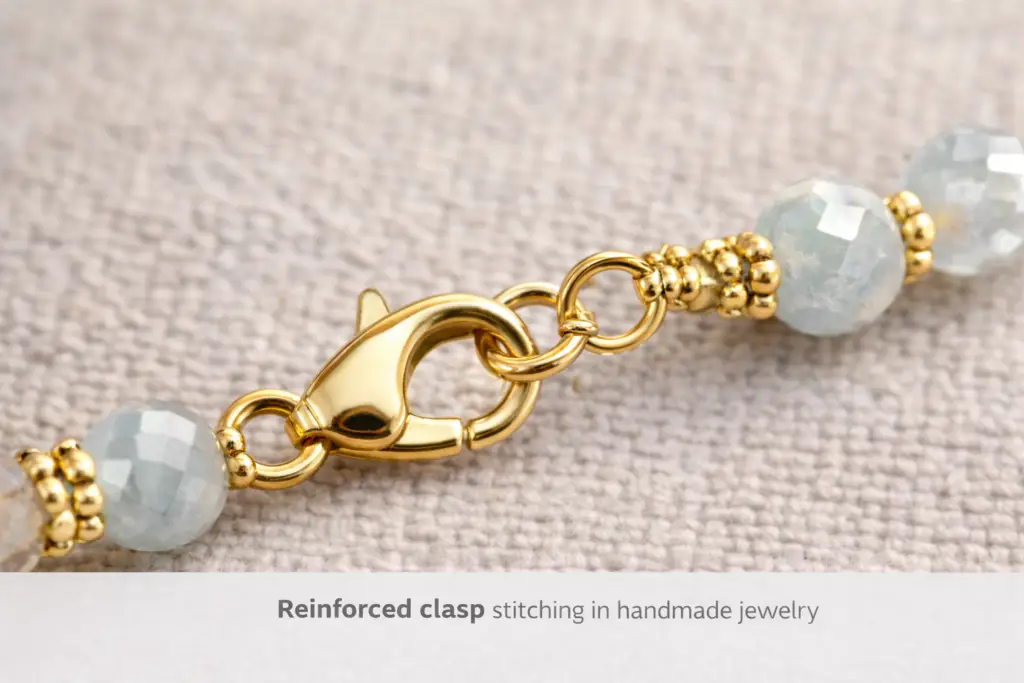
✔ Secured clasps
✔ Balanced weight
Low-quality assembly may show:
✖ Loose threads
✖ Visible glue
✖ Uneven bead tension
✖ Weak jump rings
How Glass Beads Affect Jewelry Durability
Glass itself is strong, but:
- Thin threads weaken structure
- Poor tension causes sagging
- Weak clasps cause breakage
- Friction affects coated finishes
Well-constructed bead embroidery can last many years when properly cared for.
How to Care for Glass Bead Jewelry
- Avoid perfumes directly on beads
- Store in soft pouch
- Do not soak in water
- Clean gently with dry cloth
- Avoid pulling or twisting
Bracelets experience more friction than necklaces.
BUYER CHECKLIST
Before purchasing glass bead jewelry, check:
✔ Uniform bead sizing
✔ Tight stitching
✔ Clean finishing near clasp
✔ No exposed thread
✔ No visible glue
Why Handmade Glass Bead Jewelry Is Different
Handmade beadwork requires:
- Time
- Structural planning
- Knowledge of materials
- Careful reinforcement
Each piece reflects intentional craftsmanship rather than factory assembly.
Looking for Professionally Crafted Glass Bead Jewelry?
Explore custom bead embroidery and structured glass bead designs crafted with precision and durable techniques.
Leave a Reply